






Supply chain leaders rarely ask themselves how they’d rebuild the supply chain if they could start from scratch. The answer seems too impossible. But if you could start over, without the legacy systems, the long-term contracts signed under irrelevant assumptions, the infrastructure decisions made when the world looked entirely different, what would you build?
The pace of change right now has made reimagining how supply chains are built unavoidable. As the economics of global sourcing shift and geopolitical risk reprices distance, the assumptions that shaped most supply chains, about where to source and what customers will accept, have all moved at once.
So what would you build, if you were starting fresh?
Sustainability would be a core business tenet
Most sustainability initiatives exist at the edges of the supply chain. They're layered on top of existing structures, added incrementally to processes that were designed for something else entirely. Like emissions reporting that gets bolted onto logistics systems or recycling programs retrofitted into distribution networks built for one-way movement. That architecture was never meant to carry this.
If you were building from scratch, you wouldn't do it that way. You'd design sustainability into the architecture from the start, and not primarily because regulations require it. The practices that generate the most waste are typically the ones that inflate costs, like overproduction, inefficient routing, fragmented networks, and poor returns management. These are environmental problems and financial ones simultaneously. So, a supply chain designed to minimize waste is, almost by definition, more profitable.
When sustainability is built into the architecture rather than bolted on, the downstream decisions tend to look different. Packaging gets lighter because it costs less to move, and that same logic ripples into inventory: excess stock has an environmental cost you're now measuring alongside the financial one, so you hold less of it.
You'd build closer to the customer
The global sourcing model that dominated supply chain strategy for decades was built on a simple premise: labor arbitrage and volume efficiency outweighed the costs of distance. That math still works in some contexts. But it has become significantly more complicated.
Tariff volatility, geopolitical tensions, and the growing premium consumers place on speed have all changed the calculation, as has the rising cost of inventory risk. When you're sourcing from the other side of the world, you're committing months in advance to product decisions that may not hold up in a market that can shift in weeks.
A supply chain built today, without those historical constraints, would likely be more regional. Proximity gives you something the long-distance model struggles to provide: the ability to respond quickly. Shorter networks mean faster pivots and less exposure when conditions change, which right now they seem to be doing constantly.
Global sourcing still makes sense in plenty of contexts. The question worth asking is which parts of your network genuinely benefit from it, and which are simply doing it out of habit.
Automation would change where you build, not just how
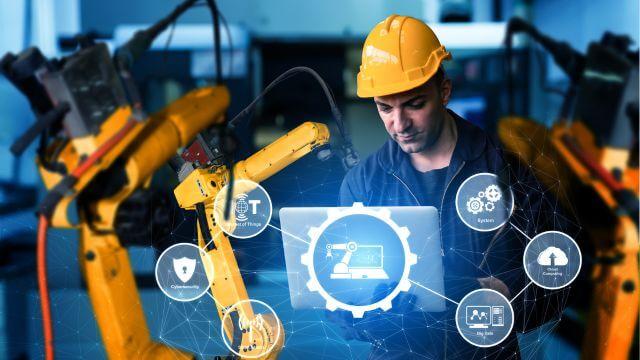
Warehouse robotics has matured well past the experimental stage. Blue Yonder's cloud warehouse execution system now directs more than 3.5 million tasks to the warehouse floor, coordinating human workers and robots at a scale that would have been unimaginable even a few years ago. Investment in the category reflects that the global logistics robots market was valued at $15 billion in 2024 and is projected to reach $72.6 billion by 2034.
A supply chain designed today would be organized around a different starting question: where does human judgment add the most value? Everything else becomes a candidate for automation. The goal is to deploy people toward the complex, variable work that automation handles poorly, while removing the repetitive and physically demanding tasks that have historically defined warehouse labor.
This shift also changes the economics of warehouse location. When labor availability is less of a constraint, you can site facilities closer to customers, which reinforces the regional network logic. The two reinforce each other in ways legacy networks rarely capture.
Real-time data would be a priority over historical assumptions
Many supply chains still operate with significant information lag. Decisions made today are based on data that reflects what happened last week or last month because the underlying systems were built for a world where change was slower, and forecasting horizons were more reliable.
A supply chain built today would start from the assumption that you can have a single, unified view of demand and supply across the entire network, updated continuously, with AI surfacing decisions that need attention rather than waiting for someone to notice a problem in a report. The gap between that description and what's available has closed faster than most organizations have been able to absorb.
With that level of visibility, how you make decisions changes. Because when you're holding less inventory, you can respond faster, and decisions that used to happen in silos start happening across the whole network. The supply chain stops being something you're always catching up to.
The gap is closeable
Every supply chain leader already knows what they'd change. The harder question has always been whether the pressure to change it would ever outweigh the cost and disruption of doing so. Right now, for a lot of organizations, it does.
The 'build from scratch' question earns its place because it strips away the comfort of legacy constraints and forces a more honest conversation about where your gaps are.
The disruptions of the last several years exposed vulnerabilities and, in doing so, created permission to change things that might otherwise have taken another decade to revisit. That's worth something.
The supply chain you'd build from scratch is closer than you think.