







In the world of supply chain, success is often defined by how well we manage the “what”: everything from manufacturing plants and container ships to raw materials and finished goods.
But the true value of the supply chain is derived from the “who”—the humans working hard at every phase of production and logistics, in addition to external partners, and, of course, the end customers.
And that’s why artificial intelligence (AI) is such a natural fit for the supply chain.
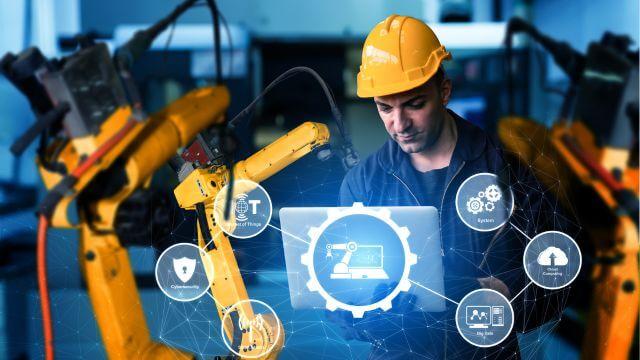
AI is already having a significant impact on supply chain operations in areas like inventory management, warehouse operations, transportation, and customer service. AI-enabled applications are leveraging technologies like machine learning, robotics, and data analytics to boost efficiency, accuracy, and scalability. As a result, businesses can respond more quickly to supply chain disruptions and gain a competitive advantage.
However, while the operational benefits of AI are widely understood, the impact on human capital has been underestimated so far.
The effect of AI on humans is twofold: on the one hand, AI takes over tedious, complex tasks, freeing up humans to focus on connection and creativity. At the same time, AI actually amplifies human skills, turning them into superpowers.
Somewhat counterintuitively, AI creates a supply chain that feels more organic and more human—powered by insight, empathy, and collaboration.
Let’s go deeper into how AI amplifies these extremely human capabilities.
Cognitive elevation: Developing a self-sufficient, innovative,
and nimble workforce
AI is already assisting with, or even taking over, routine tasks that previously required intense manual effort.
For example, smart cameras, sensors, and AI algorithms in the warehouse can locate items and then guide employees or robots to fulfill orders. In ground transportation, AI can analyze historical data, current traffic patterns, and external factors such as weather to optimize route planning, thereby reducing fuel consumption and improving delivery times. And the list goes on.
We can clearly measure how AI is impacting the physical world. But how is it impacting people?
By relieving workers of the need to complete rote activities, AI provides them with the psychological availability to focus on higher-level cognitive tasks. These tasks include strategic decision-making and exception handling, allowing them more time to develop critical thinking skills.
At the same time, the increased flow of high-quality data from AI enables them to build their knowledge base about the business. This knowledge gain makes them more aware of how their decisions affect other phases of the supply chain, and helps them identify opportunities for innovation and creativity.
The result is employees who are more self-sufficient, proactive, and nimble, better able to anticipate challenges and deal with disruptions when they happen.
Results-driven empathy: The beating heart of a customer-centric
supply chain
Humans are naturally empathetic, and empathy is the core capacity that drives customer relationships. When workers are bogged down and distracted by tedious, repetitive tasks, their emotional bandwidth is limited, and their relationships with customers suffer.
AI technologies unlock employees' empathy, giving them space to build better relationships. The ultimate goal of every supply chain is to serve the end customer, and AI can play a critical role in building a more customer-centric supply chain.
Customer-facing roles within the supply chain can be a great place to start deploying AI. Frontline customer service, claims management, and returns coordination are areas where AI can help resolve issues faster and make responses more personal, as unique customer information is available at your fingertips. This all lays the groundwork and provides emotional space for customer-facing roles to show kindness and respect during customer interactions.
However, in a good customer relationship, reactive customer service is the absolute baseline. Where AI really shines is in anticipating customer needs. McKinsey calls this the “next-best customer experience,” in which companies leverage data analytics, AI-powered predictive models, and generative AI to create personalized, proactive interactions with their customer base at scale.
Zooming out even further, you could also make the case that the most powerful form of empathy is the product itself. Using AI to orchestrate the supply chain and deliver a frictionless experience shows, perhaps more than anything, how much you value the customer relationship.
Collaborative connectivity: Amplifying the power of human communication
Supply chains are diverse ecosystems and can often be quite disparate, both within internal teams and among external partners. Often, different teams like Manufacturing, Warehousing, and Sales use specialized systems of record that do not communicate in real time. To make matters worse, communication between teams often does not occur within a centralized system, preventing effective collaboration.
In this scenario, the natural human ability to work in teams is being constrained by existing technology. AI has the power to rethink this paradigm and unlock the potential of human collaboration.
AI can be used to create a universal data layer that eliminates silos across the supply chain. That ensures that all stakeholders—both internal and external—are operating from a single "source of truth."
Not only do AI-powered dashboards analyze patterns, predict trends, and offer actionable recommendations, they can provide this information to all stakeholders in real time, eliminating communication lags and leading to more nimble decision-making.
When communication barriers are eliminated by AI, it becomes much easier for leadership to align the entire organization around the same set of business objectives. And with more visibility into cross-functional effects, redundancies, and synergies can be identified from above.
This same collaborative logic applies to relationships with suppliers. For example, AI tools can be used to facilitate collaborative demand forecasting with partners, or create dynamic risk scoring algorithms to better understand where weaknesses may occur in case of disruption.
We believe humans are the engines of productivity and profitability
Many fear that AI will dehumanize the supply chain, but in fact, the opposite is true. AI elevates the most valuable human traits, which no machine can replicate: judgment, creativity, empathy, and communication.
The organizations that win in the world of AI will be those best able to maximize the complementary capabilities of humans and machines. By putting humans first, organizations will become nimbler and more resilient, able to anticipate and manage tomorrow's disruptions.