Accelerate Informed Decisions With AI Built for Supply Chain
Built on decades of supply chain innovation and AI expertise, our predictive, generative and agentic AI solutions turn raw data into predictions and guidance that help your teams navigate this complexity.
Demystifying AI for Supply Chain Leaders
The benefits of artificial intelligence for supply chain leaders are obvious, but the implementation isn't always as straightforward. Learn why (and how) your company should prioritize AI solutions now.
Reorganizing for AI: How Supply Chain Leaders Have to Adapt
90% of supply chain leaders are currently executing a reorganization or will do so in the next 12 months. Many are preparing their teams for AI-driven supply chain technology, but how should they adapt and reorganize for an AI-first future?
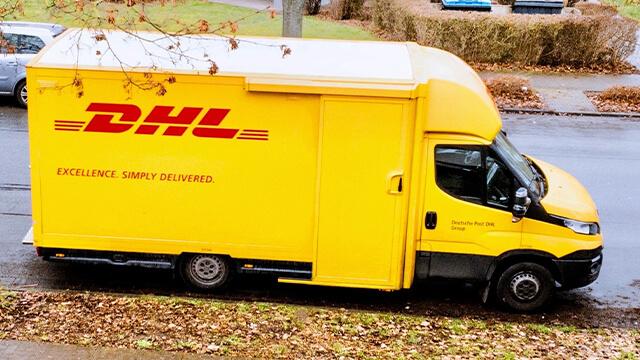
DHL saves 7% on transportation costs through better optimization of vehicles and stops with Blue Yonder Network Design
Carlsberg Group
Carlsberg shares how the company is going digital first using Blue Yonder's Transportation Management, the company's “Zero & Beyond” strategy and more.
Walgreens
Blue Yonder’s AI-based Order Management provides the ‘Magic’ behind Walgreen’s 30-minute customer order promise.
How AI-Enabled Planning Will Improve Your Supply Chain Performance
Extreme volatility, inventory shortages and data overload are all challenges businesses are facing when it comes to supply chain planning. AI-enabled planning capabilities can address these challenges by improving decision-making, agility, and collaboration across supply chain functions.
2026 Supply Chain Compass: How Supply Chain leaders are navigating complexity
The Supply Chain Compass 2026 report surveys nearly 700 supply chain leaders, exploring how they are navigating a rapidly evolving landscape shaped by AI, disruption, and rising expectations. While nearly half express strong optimism about the future, the report reveals that this confidence is driven by greater visibility, stronger technology adoption, and more integrated, data-driven supply chain strategies.
Beyond Silos: Evolving to an Enterprise Supply Chain
Incisiv explores the significant transformation underway in modern supply chains, detailing the shift away from fragmented processes and point solutions to more agile platforms and collaborative workflows. This evolution addresses systemic issues such as inflexibility and disconnected communication, enhancing supply chain responsiveness, sustainability, and profitability.
Navigating the road ahead: overcoming the 5 biggest auto industry challenges
New page
Salim Shaikh, 2 minute read
The automotive industry has been shifting gears for the last few years, driven by the transition from internal combustion engines (ICEs) to electric vehicles (EVs), the emergence of autonomous driving and a growing appetite for customized rides.
Adding to the complexity, global trade is facing another setback with a fresh wave of aggressive tariff measures. The Trump administration has introduced a 25% tariff on steel and aluminum imports, a 10% tariff on Chinese goods, and additional duties aimed at the European Union, India and Japan under a "reciprocal tariff" strategy. If enacted, these tariffs could increase the cost of new vehicle models by $4,000 to $10,000. As Ford Motor Co. CEO Jim Farley put it, “So far, what we’re seeing is a lot of cost and a lot of chaos.”
The next five years promise even more change. By 2030:
95% of new vehicles sold globally will be connected, enabling real-time data exchange and predictive maintenance. Twelve percent of these vehicles will also be equipped with level three or level four autonomous-driving capabilities.
More automotive manufacturers will have adopted a direct-to-consumer (D2C) sales model, driven by the success of Tesla's D2C approach, with other EV manufacturers like Lucid and Ford also adopting similar strategies.
While these trends promise a more sustainable future, automakers are still grappling with the complexities they've unleashed on their supply chains. From securing critical battery materials to adapting to the rapid pace of technological innovation, automakers face an ongoing, uphill battle to maintain their competitive edge.
In this blog post, we'll explore today's biggest challenges facing the automotive industry. More important, we’ll discuss the solutions and strategies that can help automakers navigate this turbulent terrain — and deliver a more resilient, optimized supply chain solution that leaves competitors in the dust.
What are the tariff implications for industrial manufacturers?
New tariffs are causing increased demand for US-made goods, but they also create urgent logistical challenges that industrial manufacturers must address now. Find out how to proactively handle this double-edged sword.
1. The need for more certain outcomes amid uncertainty
In the face of uncertainty, complexity and volatility, automakers need to achieve greater decision certainty. Advanced technology enables them to create a variety of what-if simulations and contingency plans to account for different tariff impacts, geopolitical risks, alternative suppliers both onshore and offshore, demand fluctuations and potential supply disruptions. Leveraging agile and precise scenario modeling, powered by artificial intelligence (AI), allows organizations to assess the possible effects of their decisions on service levels, cash flow, costs, reliability, risk, profitability and overall financial health.
Increasing customer demands and regional tastes have made it increasingly difficult for automotive planners to forecast demand accurately. ICE vehicle production planners grapple with the sheer number of components and tiers within the supply chain. Orchestrating the flow of thousands of parts from numerous suppliers presents a logistical nightmare, making it incredibly difficult to predict demand for specific configurations — and avoid either surplus inventory or part shortages. This complexity is amplified by the vast array of available ICE vehicle options, leading to excess inventory of slow-selling models and the need for costly discounts.
EV production, while simpler in terms of component count, faces a critical bottleneck: Battery production. Batteries are the pacemaker of EV manufacturing, the most crucial and in-demand component. The limited availability of batteries can significantly impact an EV manufacturer's ability to meet production targets, regardless of demand. Securing a stable and sufficient battery supply chain is paramount for EV manufacturers, as shortages can lead to production delays and lost sales opportunities. In addition, the rapid evolution of battery technology, and the race for increased range and charging speeds, add another layer of complexity to EV production planning.
The challenge for automotive manufacturers remains the same: They're either drowning in surplus inventory that is no longer needed, or they have insufficient stock to meet current demand — forcing them to pay high prices to source missing parts. The result is a cascade of negative outcomes: Unsold products, lower margins due to overspending on procurement, and lost sales opportunities because demand cannot be met.
The sheer number of options in vehicle configurations adds more fuel to the fire. Predicting which configuration will sell, in which region, is like trying to hit a moving target in the dark. This often results in an excess inventory of slow-selling models, which then require profit-eroding discounts to clear. In the U.S. alone, the supply of available unsold new vehicles was 2.61 million units at the start of 2024 — a 50% increase from the previous year.
Faced with the sheer pace of change combined with complexity, leading automakers are introducing AI-enabled techniques to sense changes in demand patterns sooner, and then autonomously correct in real time. Boundaryless scenario planning means integrating long-term, medium-term and real-time perspectives to create an always-on, digital twin of the business that holistically represents its logistic and financial state. The benefit is that automakers can get ahead of disruption and optimize the outcome in terms of both customer and business results.
2. A lack of transparency and visibility across tiers
The automotive industry relies on a complex ecosystem of dealers, original equipment manufacturers (OEMs), Tier 1 and Tier 2 suppliers, third-party logistics providers (3PLs) and electronic manufacturing services.
This complexity is further compounded by increasing environmental regulations, which demand enhanced tracking and tracing across the entire supply chain, from procurement to distribution. Automakers must now meticulously monitor the origin and lifecycle of materials and components to mitigate regulatory and compliance risks. This is especially true for key components like EV batteries, where enhanced tracking and tracing are crucial for illuminating the end-to-end supply chain.
Effective planning and collaboration across these tiers are essential to ensure that all raw materials and components are exactly where they’re needed, when they’re needed. To achieve this, automotive companies need to maintain a birds-eye view of the entire supply chain, with real-time visibility into stock levels across all suppliers, to mitigate potential supply gaps caused by demand spikes or supplier disruptions.
Without this end-to-end visibility, automakers struggle to maintain control over the supply chain, leaving them vulnerable to delays, increased costs and potential production disruptions.
End-to-end visibility is crucial for anticipating disruptions in the flow of raw materials upstream, and finished goods downstream, to meet customer demand. By visualizing the entire supply chain — from suppliers and factories to distribution centers, retailers and customers — automakers can assess the real-time impact of supply changes, demand shifts and other disruptions, enabling proactive risk mitigation strategies that are both lean and resilient.
For instance, once a disruption is identified, advanced technology can dynamically recalibrate plans using what-if scenarios to mitigate risks and optimize financial outcomes. Supported by AI and machine learning (ML), digital solutions enable organizations to make trade-offs, balance competing priorities, and respond with remarkable speed and agility — often without human intervention.
In the case of missed part deliveries, modern technology can analyze alternatives such as expediting a replacement from the original source, or sourcing parts from an alternate location. Optimization engines can also evaluate carrier speeds and route efficiencies to minimize disruptions, ensuring the most cost-effective solution and enabling rapid recovery from any supply chain interruptions.
3. Sales & operations planning that’s disconnected from execution
In the global auto industry, one size does not fit all. Automotive companies must deal with a variety of different parts to serve customer demand. EVs have different engines, battery systems and electronics compared to ICE vehicles — while smart or autonomous vehicles require advanced sensors, chips and software. Even different body styles built on a common chassis require different parts.
Increased variety complicates production scheduling and makes it harder to optimize capacity utilization. Due to fluctuating demand and disruptions, manufacturers may struggle to keep their factories running at full capacity. They might have idle production lines or be forced to run overtime to meet unexpected orders, reducing profits. The challenge is even more pronounced for traditional OEMs that must juggle both ICE and EV production. They must manage the inherent complexities of each supply chain and manufacturing process, while coordinating the often disparate demands of these parallel production streams.
Even small changes in demand or supply can ripple through the entire production process, requiring constant adjustments to the schedule. Ongoing changes in demand, supply and product configuration make it difficult to establish a pearl chain model which aims for an optimized and consistent production flow. This can lead to inefficiencies, higher costs and missed delivery dates.
To address these challenges, greater collaboration and transparency are needed across the entire supply chain. Improved communication between production and sales is needed to ensure the accuracy of commitment dates to customers, as well as support customized vehicle requests.
"Only 30% of automotive experts report having two-way communication with suppliers through a digital or real-time application and interface."
To achieve this, manufacturers need to enable seamless sales & operations planning and execution. An end-to-end, connected and responsive digital supply chain twin can synchronize decision making across volume planning, mix planning, slotting, sequencing and detailed scheduling. This helps drive real-time insights to accurately assess consumer needs and adapt the supply chain, while maintaining profitability and maximizing capacity.
4. High levels of supply chain risk exposure
Manufacturers are increasingly shifting their supply chain strategies to mitigate geopolitical disruptions, long lead times and fluctuating demand — reducing their reliance on distant foreign suppliers by expanding their local and nearshore supplier networks. This trend, often referred to as reshoring or nearshoring, aims to create more resilient and responsive supply chains. Ford is an example of this, as it’s collaborated with U.S. semiconductor chip manufacturer GlobalFoundries to reduce its dependence on overseas suppliers.
Developing supply chain resiliency includes revisiting the supply chain network design to reconfigure global and regional supply chain flows, source critical components from local suppliers, and conduct trade-offs according to needs, cost, service and risk scenario analysis. Although reshoring and nearshoring can mitigate some geopolitical risks, they also introduce new supply chain challenges. Establishing new supplier relationships takes time and can create initial bottlenecks, quality issues or capacity constraints as these new partnerships are established and ramped up. These challenges can disrupt the smooth flow of parts and materials, impacting production schedules and increasing costs.
Combined with evolving customer demands, the auto industry is eager to adopt a more agile and adaptable approach to sourcing, storage and transportation — not only for individual parts and raw materials, but also for assembled components, pre-final assembly vehicles and even completed vehicles.
This requires a fully integrated, holistic view of the entire supply chain, from raw material extraction to final product delivery. Manufacturers need to develop robust planning and forecasting capabilities, implement flexible manufacturing systems and establish close collaboration with their supplier network. This positions them to ensure a consistent and reliable supply of components, minimize disruptions and ultimately meet customer demand.
5. A lack of advanced technology to manage today’s complexity
Imagine trying to race a Formula 1 car powered by an ICE from the 1900s. No one would build that — and it wouldn’t be able to keep up with competitive cars with modern engines. Yet many automakers are operating with a similar handicap: Relying on outdated, legacy systems that are ill-equipped to handle the demands of today's dynamic market.
These legacy systems, often built decades ago, operate in silos, creating information blind spots that hinder critical decision-making. Automakers struggle to inject new technology into these outdated systems, leaving them with solutions that provide no real-time visibility, holistic view of inventory levels across the entire supply chain, or capability to accurately predict demand fluctuations. Siloed, static and disjointed decision-making across multiple platforms creates delays in responding to changes in demand mix and supply disruptions, leading to inefficiencies and a significant impact on profitability.
To overcome these challenges and modernize their operations, automakers must move beyond legacy, siloed offerings. They need to put a modern engine into that race car. An end-to-end, connected and responsive digital supply chain twin synchronizes decision-making across volume planning, mix planning, slotting, sequencing and detailed scheduling.
Cloud-based solutions provide a cost-effective and scalable alternative, enabling companies to access cutting-edge technologies like AI and ML on demand. Utilizing a unified, AI-enabled cloud platform, automotive companies can unlock the true value of their data. AI algorithms can analyze vast amounts of data in real time, providing valuable insights into supply chain dynamics, identifying potential risks and recommending optimal courses of action. This empowers organizations to make faster, more informed decisions, improve operational efficiency and gain a competitive edge in the rapidly evolving automotive market.
Drive greater performance and navigate today’s challenges with Blue Yonder
Blue Yonder offers a comprehensive set of AI-powered solutions designed to help automakers navigate these complexities and achieve operational excellence. Our solutions encompass AI-driven planning, sequencing, scheduling, warehousing and logistics — all seamlessly integrated within an n-tier supply chain network. This empowers a modern approach to auto manufacturing that maximizes profits and minimizes risk.
Whether automakers are looking to optimize supply chains to support the transition to new vehicle types, enhance operational agility, or foster closer collaboration with business partners, Blue Yonder provides the tools they need to succeed, including:
Integrated demand and supply scenario planning enables automakers to create a range of what-if simulations and contingency plans based on demand realization, supply disruption and sustainability scenarios. They can determine the right mix between ICE, EV and hybrid vehicles, as well as develop strategies to reduce working capital, such as enhancing forecasting accuracy and optimizing inventory.
Multi-tier visibility and collaboration positions automakers to illuminate the supply chain network and foster n-tier collaboration for enhanced visibility, reduced premium freight and a smaller carbon footprint.
Synchronizing execution empowers automakers to insource logistics to engage in more effective strategic collaboration, leading to improved control over logistics functions, reduced freight costs and lower CO2 emissions.
Configure-to-order helps OEMs shift away from the traditional make-to-stock, “flood the zone” approach that necessitates holding 60 days of inventory. Instead, they can embrace a hybrid “push” and “pull” based model that leverages configure-to-order , various ICE, EV and hybrid powertrains that reduces inventory levels and funds EV initiatives.
Connected sales & operations planning and execution enables the creation of an end-to-end, connected and responsive digital supply chain twin that synchronizes decision-making across volume planning, mix planning, slotting, sequencing and detailed scheduling.
Automakers can experience enhanced efficiency, increased resilience, and improved profitability by leveraging Blue Yonder solutions. They can overcome the automotive industry's key challenges, including meeting ever-changing demand, and gain a significant competitive edge in this rapidly evolving market.
Discover how we've helped lower transportation and labor costs by 25%
We reveal how our automotive solutions can help you build a high-performance, agile, and resilient supply chain that adapts to every turn.