Accelerate Informed Decisions With AI Built for Supply Chain
Built on decades of supply chain innovation and AI expertise, our predictive, generative and agentic AI solutions turn raw data into predictions and guidance that help your teams navigate this complexity.
Demystifying AI for Supply Chain Leaders
The benefits of artificial intelligence for supply chain leaders are obvious, but the implementation isn't always as straightforward. Learn why (and how) your company should prioritize AI solutions now.
Reorganizing for AI: How Supply Chain Leaders Have to Adapt
90% of supply chain leaders are currently executing a reorganization or will do so in the next 12 months. Many are preparing their teams for AI-driven supply chain technology, but how should they adapt and reorganize for an AI-first future?
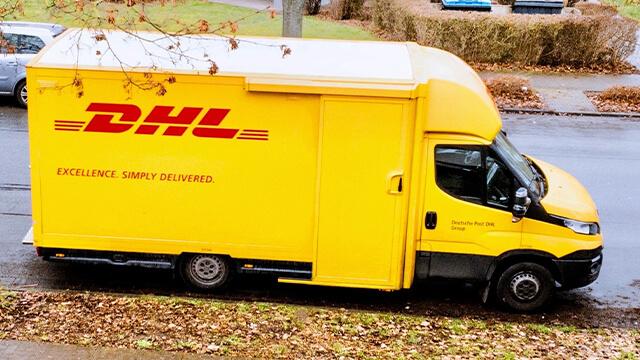
DHL saves 7% on transportation costs through better optimization of vehicles and stops with Blue Yonder Network Design
Carlsberg Group
Carlsberg shares how the company is going digital first using Blue Yonder's Transportation Management, the company's “Zero & Beyond” strategy and more.
Walgreens
Blue Yonder’s AI-based Order Management provides the ‘Magic’ behind Walgreen’s 30-minute customer order promise.
How AI-Enabled Planning Will Improve Your Supply Chain Performance
Extreme volatility, inventory shortages and data overload are all challenges businesses are facing when it comes to supply chain planning. AI-enabled planning capabilities can address these challenges by improving decision-making, agility, and collaboration across supply chain functions.
2026 Supply Chain Compass: How Supply Chain leaders are navigating complexity
The Supply Chain Compass 2026 report surveys nearly 700 supply chain leaders, exploring how they are navigating a rapidly evolving landscape shaped by AI, disruption, and rising expectations. While nearly half express strong optimism about the future, the report reveals that this confidence is driven by greater visibility, stronger technology adoption, and more integrated, data-driven supply chain strategies.
Beyond Silos: Evolving to an Enterprise Supply Chain
Incisiv explores the significant transformation underway in modern supply chains, detailing the shift away from fragmented processes and point solutions to more agile platforms and collaborative workflows. This evolution addresses systemic issues such as inflexibility and disconnected communication, enhancing supply chain responsiveness, sustainability, and profitability.
Understanding AI-powered warehouse management, orchestration, agents, migration, and Cognitive Solutions for Execution
Overview: Blue Yonder cognitive Warehouse Management is part of Cognitive Solutions for Execution. It brings together proven warehouse execution, AI, machine learning, agentic experiences, and real-time orchestration to help warehouse teams make faster, more informed decisions while keeping people in control of operations.
General information
Blue Yonder cognitive Warehouse Management is the warehouse management solution within the broader Cognitive Solutions for Execution portfolio. It combines proven WMS execution capabilities with AI, machine learning, agents, and real-time orchestration to help organizations sense, decide, adapt, and learn across daily warehouse operations.
Cognitive Solutions for Execution is the portfolio-level direction for intelligent, adaptive supply chain execution. cognitive Warehouse Management applies that direction to the warehouse by helping coordinate inventory, labor, equipment, robotics, automation, yard activity, returns, and transportation execution signals. The intent is to move beyond transactional work management toward adaptive execution and continuous optimization across people, systems, and automation.
Traditional WMS solutions primarily execute transactions, enforce rules, and direct warehouse work. cognitive Warehouse Management keeps those execution strengths, then adds intelligence that helps teams forecast needs, evaluate live signals, prioritize work, rebalance resources, improve slotting, and coordinate people and automation. The result is a warehouse operation that can execute today’s work while continuously improving how decisions are made.
Traditional WMS
Executes warehouse transactions and directs work.
Relies primarily on static rules and configurations.
Reacts after exceptions or performance gaps appear.
Focuses on tasks, inventory movements, and compliance.
Manages labor, equipment, and automation in separate workflows.
Depends heavily on manual planning and re-planning.
Provides screens, reports, and dashboards that users must interpret.
Often operates primarily inside the four walls of the warehouse.
Helps teams run the warehouse.
Cognitive WMS
Executes work and continuously optimizes decisions, priorities, and outcomes.
Combines operational rules, AI, machine learning, agents, and user-defined guardrails.
Anticipates issues, surfaces exceptions earlier, and recommends actions.
Focuses on service levels, throughput, resource utilization, resilience, and decision quality.
Orchestrates people, equipment, robotics, automation, and workflows together.
Uses resource forecasting and orchestration to support continuous adjustment during the shift.
Provides briefs, recommendations, conversational investigation, and guided actions.
Connects warehouse execution with yard, transportation, returns, order, labor, and broader execution signals where implemented.
Helps the warehouse sense, decide, adapt, and learn over time, enabling teams to run faster and more efficient operations.
Real-time warehouse orchestration is the ability to coordinate people, inventory, equipment, automation, robotics, and workflows against shared operational objectives as conditions change. Instead of optimizing isolated systems or work queues independently, cognitive WMS helps synchronize execution across the warehouse so teams can protect service levels, improve throughput, and respond with greater precision.
The Warehouse Ops Agent acts as an AI-powered operational teammate for warehouse leaders and supervisors. It turns warehouse signals into briefs, highlights exceptions, explains why an issue matters, and recommends next-best actions so users can investigate, decide, and act with greater confidence.
Warehouses are operating with more volatility, tighter labor constraints, more automation choices, and higher service expectations than traditional, static execution models were designed to handle. cognitive Warehouse Management reflects the shift from transaction execution alone toward intelligent, adaptive execution powered by AI, machine learning, agents, and orchestration—while preserving the proven WMS foundation customers rely on.
The cognitive WMS is designed to support a vendor-agnostic automation strategy. Through Robotics Hub and warehouse orchestration capabilities, organizations can connect and coordinate robotics, equipment, and automation providers while maintaining a common operational view and shared execution priorities.
The cognitive WMS is designed to augment human decision-making, not replace it. AI-generated insights, recommendations, and actions should be presented with operational context and explainability so users can review, approve, adjust, or override recommendations based on business priorities, policies, and experience.
The subscription centers on the core Warehouse Management Solution and the embedded capabilities required to run modern, high-volume warehouse operations. This includes warehouse management operations, embedded warehouse execution, work optimization, resource forecasting and orchestration, robotics/automation connectivity, advanced slotting, warehouse labor, warehouse load building, yard visibility, returns processing, analytics, and the Warehouse Ops Agent where available. Optional or consumption-based capabilities may vary by commercial package, release, and deployment model, so commercial details should be validated with the account team.
Blue Yonder cognitive Warehouse Management is designed to operate as the warehouse logic and orchestration layer, connecting warehouse execution, labor, equipment, robots, automation vendors, yard, transportation, order management, and broader supply chain signals. The important message is interoperability: the WMS should coordinate the work, not force customers into a single automation vendor or brittle one-off integrations.
No. AI and machine learning capabilities are additive to the operational controls, rules, configurations, and guardrails customers rely on. Customers can adopt capabilities at their own pace, by site, zone, workflow, or use case. This allows teams to test, learn, and scale AI-assisted optimization without abandoning the practices that keep the operation stable.
The newest AI-native and agentic capabilities are primarily associated with the SaaS, platform-native WMS experience because they depend on cloud scale, platform services, and continuous innovation. Blue Yonder continues to support on-premise customers with appropriate technical updates, security patches, and fixes. Some agent-led analysis and advisory experiences may be available for on-premise environments depending on scope and services engagement; confirm availability with product management or the account team before making a customer commitment.
Most next-generation AI and agentic capabilities are positioned around the latest SaaS WMS releases beginning with the 2025.2 release family and continuing through subsequent releases. Exact feature availability depends on release, packaging, entitlement, and implementation readiness, so confirm the current release matrix before quoting a specific capability.
Security and data privacy
No. Your data is secure within the Blue Yonder Platform and is not shared. Each customer's data is fully isolated and accessible only to that customer. When machine learning (ML) models and agents are trained, they are trained on a per-customer basis using only the data available within your specific environment.
We do not use one customer's data to train a global model without explicit permission. If you choose to opt into a consortium model, only data from consenting customers is securely aggregated to build a shared, anonymized global model. This process ensures full compliance with data privacy, ownership, and intellectual property protection principles. If you do not opt in, your data remains isolated for your use only.
The data within Blue Yonder WMS and other Blue Yonder offerings remains entirely within the secure boundaries of the Blue Yonder Platform. Both schema and metadata are part of our proprietary intellectual property and are handled with strict adherence to IP protection standards.
We maintain rigorous security standards. The data resides strictly within the “four walls” of the Blue Yonder Platform for WMS and other offerings. Our security measures ensure that only you, the customer, have access to your data. For specific security protocols and certifications, please reach out to your account team for a detailed security blurb from our security team.
User experience (UX/UI)
The user experience for Blue Yonder cognitive Warehouse Management is designed to combine familiar warehouse workflows with a more modern, role-aware experience. Users can continue working in the operational processes they know while gaining AI-powered support that surfaces the right information at the right time, helps them investigate issues, reviews recommendations, and take action with greater confidence. The goal is to make the transition smooth while improving speed, visibility, and decision-making across daily warehouse operations.
The Warehouse Ops Agent provides a conversational and briefing-oriented experience for warehouse leaders and supervisors. It can summarize operating conditions, highlight exceptions, explain why an issue matters, and recommend next-best actions. The Blue Yonder WMS comes with one warehouse agent possessing multiple skills and use cases, with more being developed over time.
Yes. Blue Yonder is evolving mobile experiences to give warehouse supervisors and floor leaders role-based visibility, AI-powered insights, and timely alerts so they can manage exceptions, priorities, labor, equipment, and performance from wherever work is happening.
Yes. WMS supports operational communication to floor associates through supported UI and device experiences, including RF/message flows where configured. Our approach delivers real-time alignment across supervisors and associates.
The updated UX direction is to reduce unnecessary screen switching and bring related inventory context into more unified views where appropriate. Our AI-powered WMS offers an improved user experience that consolidates LPN, location, status, and lot/batch codes into a single, unified inventory view to streamline your operations.
Training and Change Management
Blue Yonder provides training and enablement to help teams adopt cognitive WMS capabilities with confidence, including formal learning, release enablement, demos, implementation guidance, and role-based education. As AI, agents, and orchestration evolve, training focuses on how capabilities work, how to evaluate and act on recommendations, and how to apply them in daily warehouse operations.
The biggest change is helping operations teams trust and work confidently with adaptive systems. Teams do not need to understand the underlying models, but they do need clear explanations of what the system recommends, why it matters, when to approve or override suggestions, and how ongoing feedback improves results over time. A successful change management approach should emphasize human-in-the-loop adoption, governance, and practical training for daily warehouse decisions.
Data quality becomes more important as customers adopt predictive and self-learning capabilities. AI and ML can help detect patterns and recommend improvements, but they still depend on accurate item, location, labor, equipment, travel, capacity, and process data. The simple message remains: better data leads to better recommendations.
Customers do not need to hire data scientists to use Blue Yonder WMS AI and ML capabilities. They may, however, benefit from clearer ownership around master data, process governance, exception management, automation performance, and continuous improvement. The adoption model should be practical: equip today’s operations teams to work with intelligent systems.
Migration and versioning
Yes. Blue Yonder supports migration from heritage and on-premise WMS environments to modern SaaS WMS through professional services, migration tooling, release guidance, and implementation methodology. The migration path is designed to help preserve operational intent while moving customers toward an update-safe architecture; scope and timing depend on the current version, customizations, integrations, data quality, and operational complexity.
The upgrade path is a guided migration to Blue Yonder’s platform-native SaaS WMS. Migration tooling, services, and implementation guidance help preserve data, configuration, and operational intent where possible, while a structured fit-gap assessment identifies what can move forward, what should be adapted through supported extension patterns, and what may be retired as customers modernize.
No. Customers do not necessarily need to upgrade to an interim version before moving to AI-powered WMS. Blue Yonder supports a guided migration to the target SaaS WMS release, with any required technical steps handled as part of the migration process. The best path depends on the customer’s current version, extensions, integrations, data quality, and operational complexity.
There is no single minimum-version answer for every customer. The transition path depends on the current WMS version, customizations, integrations, data quality, and operational complexity. Older or highly customized environments typically require more assessment, services support, testing, and change management, so Blue Yonder recommends a fit-gap review to determine the best path to AI-powered WMS.
Blue Yonder helps customers evaluate existing customizations as part of a structured fit-gap assessment. This process identifies what can be addressed through standard capabilities or configuration, what should be adapted using supported extension patterns, and what may no longer be needed as operations modernize. The goal is to protect prior investments while helping customers move toward a more flexible, update-safe architecture.
Blue Yonder is evolving Dispatcher capabilities toward the modern, AI-powered WMS experience while continuing to support Dispatcher customers in line with committed policies and customer needs. Our goal is to help customers protect their current operations while providing a clear path to future-ready warehouse management through migration guidance, services, and tooling.
AI and ML Capabilities
AI and machine learning help warehouse teams anticipate issues, prioritize work, optimize slotting, forecast resources, balance labor and automation, and recommend actions that protect service levels and reduce cost. These capabilities build on the rules and controls customers already rely on, so teams can adopt AI-assisted optimization at their own pace while keeping people in control of operational decisions.
AI and machine learning models are trained using relevant operational data from each customer’s environment, such as transaction history, demand signals, activity timing, location characteristics, travel paths, equipment data, and seasonality patterns where applicable. More complete historical data can improve model quality, but requirements vary by use case, site, and capability.
No. Blue Yonder packages AI and ML into operational workflows so warehouse teams can use recommendations without building or maintaining models themselves. Customers may have advanced analytics teams, but day-to-day users should experience the capabilities through briefings, recommendations, explanations, alerts, and actions in the workflow.
Warehouse Ops Agent slotting intelligence helps supervisors improve item placement by turning warehouse signals into prioritized, explainable recommendations. It considers factors such as demand patterns, receipt frequency, expected quantities, space utilization, bin size, travel paths, and storage constraints to recommend more efficient locations and storage assignments. The goal is to help teams reduce travel, improve space utilization, support replenishment and consolidation strategies, and make slotting decisions with greater speed and confidence.
Advanced Slotting uses data-driven optimization to recommend better item placement, bin or storage assignment, replenishment strategies, and movement opportunities based on demand, receipt frequency, space, travel, and operational constraints. Position it as continuous improvement for slotting—not a one-time spreadsheet exercise.
Resource forecasting helps teams anticipate labor, equipment, and automation needs before the shift. Resource orchestration helps assign the best available resources to the highest priority work as conditions change during the day. Together, they connect planning and execution so warehouses can respond to demand shifts, exceptions, and capacity constraints with greater precision.
Blue Yonder Robotics Hub helps customers connect, onboard, and orchestrate robotics, equipment, and automation providers through a flexible, vendor-agnostic automation network. It enables standardized connectivity, WMS-directed execution, unified visibility, and coordinated work across people, robots, equipment, and automation systems.
AI agent capabilities are primarily designed for Blue Yonder’s latest SaaS, platform-native WMS experience. Select agent-assisted briefs, analysis, or services-supported use cases may be available for on-premise environments, including Warehouse Ops Agent support where applicable. Availability depends on the customer’s version, environment, scope, and implementation approach.
Warehouse Labor Management is not mandatory for AI and ML use cases, but many labor, resource, and productivity recommendations become stronger when detailed labor and operational data are available. Specific data needs vary by capability and should be reviewed during implementation planning.
Implementation, integration, and extensibility
Blue Yonder supports implementation and adoption with proven services methodology, migration tooling, partner enablement, release guidance, and customer success support. Each implementation is designed to align technology, data readiness, process design, integration needs, and change management so customers can adopt cognitive WMS capabilities with confidence.
The cognitive Warehouse Management supports interoperability by connecting warehouse execution with other Blue Yonder and third-party systems where implemented. This helps coordinate workflows and decision-making across WMS, yard, transportation, order management, returns, labor, automation, robotics, and planning signals for more connected supply chain execution.
Blue Yonder’s modern architecture supports update-safe extensibility, allowing customers to adapt workflows and integrations to their operational needs without creating fragile customizations that can limit future innovation. This approach helps customers stay flexible while continuing to benefit from ongoing SaaS releases and platform enhancements.
Have additional questions? Contact us and we will be happy to guide you along your journey.