







Today, many retailers purchase logistics services based largely on price. In our research, 48% of retailers told us that they don’t see logistics service providers as strategic enablers. As a result, they’re inclined to compare service levels and prices, treating LSPs as replaceable commodity offerings. Changing that perception and proposition would be instrumental for LSPs, who can become more closely integrated with their customers’ strategy, offer additional value-added services, and ultimately win more new business and retain more existing business.
For LSPs then, the challenge is to stand out and differentiate in an increasingly commoditized market. One of the biggest potential differentiators is speed—speed of decision-making and speed of execution, harnessing more data to drive greater efficiency at scale. The way to achieve it? Unifying data to take unified action across the execution layer.
How to turn logistics data into value
The challenge for LSPs is not a lack of data, it is turning data into action. Information lives across disconnected systems, sites, teams, and partners, making it difficult to see the full picture and respond quickly. Many providers offer visibility, but now visibility is table stakes, not a differentiator. Far fewer LSPs can turn that visibility into coordinated execution.
As shipper expectations rise and supply chains become more interconnected, LSPs need more than dashboards and alerts. They need the ability to act on insight in real time, coordinating their entire operation, fulfillment, returns, and trading partners from a single operational environment.
Consider a common scenario: Shipment data lives in one system, inventory data in another, and partner information somewhere else entirely. Integrations are manual. Teams rely on spreadsheets, emails, and tribal knowledge to fill the gaps. This results in delayed decisions, slow exception management, billing inaccuracies, and an inconsistent customer experience that puts renewals and growth at risk.
For LSPs serving many clients, fragmentation is more than an operational headache, it becomes a barrier to scale. You cannot consistently deliver service, onboard customers quickly, or protect SLAs when critical information is trapped in disconnected systems.
How unified data leads to intelligent decision-making
Leading LSPs are taking a different approach: creating a unified, AI-enabled operational foundation that connects data, decisions, and execution across the supply chain. The results are:
Faster, more confident decisions. When operational, inventory, transportation, and fulfillment data are connected, teams can identify risks sooner, understand impacts faster, and make decisions based on the full operational context rather than fragmented data sources.
One real-time view across customers, sites, and partners. Leading LSPs increasingly require visibility beyond individual systems and facilities. Connecting warehouses, inventory, carriers, suppliers, and customers into a shared operating environment helps eliminate blind spots, improve collaboration, and coordinate decisions across the network.
AI-driven decision support and automation. At Blue Yonder, we’re embedding AI-driven recommendations directly into execution workflows. This helps operators to identify risks sooner, prioritize coordination across their partners, resolve issues faster, and move from insight to execution without relying on manual intervention.
While many technology providers focus on visibility within a single function, leading LSPs are increasingly investing in end-to-end execution, connecting data, workflows, partners, and decisions across the entire supply chain ecosystem. The goal isn’t to see what’s happening; it’s to respond faster, operate more efficiently, and deliver a better experience for retailers and their customers alike.
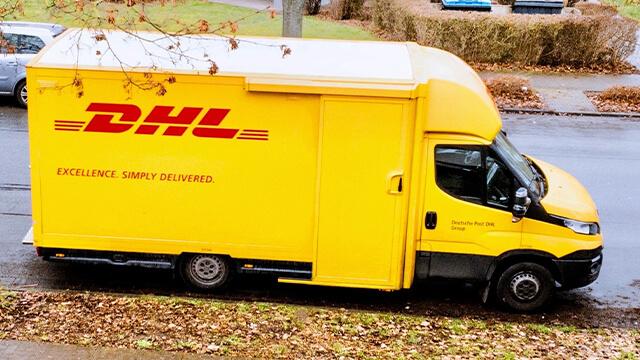
Leading LSPs like DHL, Kenco, Rhenus, and Rohlig leverage Blue Yonder’s unified execution solutions to deliver consistent service at scale. By connecting data across operations, partners, and customers, they turn information into faster decisions and consistent action across the entire supply chain network, standing out from the crowd and winning retail logistics business.
