How economic uncertainty is transforming supply chains

Blog

How economic uncertainty is transforming supply chains

Economic uncertainty has become a permanent fixture of the retail landscape and a massive challenge for supply chain leaders. The numbers tell the story: Food prices have surged 31% since 2019. Energy costs climbed 3.3% in just the past year. 

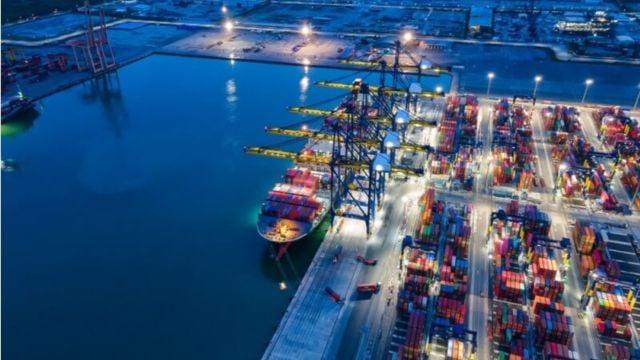
And shipping costs? They've gone completely wild. Container rates that clocked in at $1,342 for a 40-foot container in October 2023 skyrocketed to more than $5,900 by July 2024 on the global composite index, which tracks freight rates across eight major shipping routes including Shanghai to Rotterdam, Shanghai to Los Angeles, and Shanghai to New York. That's a staggering 340% increase in less than a year.

Rates have come back down since those 2024 peaks but are still more than twice the prices seen in 2023. As of March 2025, global rates averaged $2,264 per 40-foot container, compared to the pre-pandemic average of $1,420 in 2019.

Add shifting tariff policies that are causing headaches to keep track of and anxious consumer sentiments to the mix, and you've got a perfect storm of volatility.

But here's the thing: The most successful retailers aren't just trying to survive this uncertainty; they're using it as a competitive advantage.
 

Economic ripple effects hit every link in the chain

Economic pressures like the ones we’re experiencing now create a domino effect that touches every aspect of supply chain operations.

Consumer behavior goes sideways

Shoppers are drastically changing their purchasing patterns. Recent data shows consumers are spending 10% of their clothing budgets on secondhand platforms like Poshmark and ThredUp, while trading down from premium to value brands across the board. These rapid changes are leaving retailers with the wrong inventory in the wrong places.

The cost squeeze

Rising costs at every stage—raw materials, manufacturing, transportation, labor—are squeezing margins while consumers become increasingly price-sensitive. Retailers face an impossible choice: Absorb costs and hurt profitability, or pass them along and risk losing customers.

Forecasting becomes a guessing game

When consumer preferences shift dramatically within weeks, annual planning cycles become obsolete. And traditional forecasting models built on historical patterns struggle when those patterns become useless at predicting future behavior. 

Supplier vulnerabilities multiply 

Economic pressures extend beyond retailers to their suppliers and manufacturers, creating cascading risks of disruption, financial instability and production challenges.

The painful reality for traditional supply chains

These challenges are hitting companies with traditional, siloed supply chain operations particularly hard. When departments operate from different data sources and systems that don't talk to each other, the organization's ability to respond cohesively to rapid changes is severely compromised.

Traditional retailers find themselves constantly reactive—adjusting to changes after they've already impacted operations. Their planning teams work in isolation from inventory management, pricing teams make decisions without visibility into supply constraints and nobody has a complete picture of what's actually happening across the business.

The result? Stockouts of trending products while slow-movers pile up in warehouses. Price adjustments that come weeks too late. Manual coordination efforts that eat up valuable time while competitors move faster. In an environment where consumer preferences can shift dramatically within days, these delays become devastating.

But while some retailers struggle with these mounting pressures, others are taking a completely different approach.
 

Navigate the future with confidence

Discover the industry's direction, the state-of-the-art in supply chain management, and the key actions leaders are prioritizing to build resilience, implement new technology, and achieve sustainability goals.

Supply chain leaders are fighting back

The most successful retailers have discovered that thriving in uncertain conditions demands that they have the right data at the right time and the capability to act on it immediately.

That means implementing a new supply chain model that focuses on “precision at speed” to sense demand changes in real time and respond with accuracy, eliminating the need for costly buffers while actually improving customer service.

And according to the latest Supply Chain Compass 2025 report, supply chain leaders are taking action.

Respondents identified better demand planning (46%) and quickly obtaining and analyzing data on performance (46%) as the two most essential actions for success, followed by investing in tracking and visibility solutions (45%), digital software transformation and innovation (41%), and managing supply chain costs (33%).

A fundamental shift in supply chain strategy

According to the Supply Chain Compass 2025 report, smart retailers are shifting from optimizing for efficiency in stable conditions to building resilience in volatile ones. 

In addition: 

  • 40% are looking to improve efficiency and productivity
  • 29% want to build more resilient supply chains 


What it takes to thrive

The retailers that will succeed through continued economic uncertainty aren't those hoping for a return to stability. They're the ones learning to navigate skillfully through volatility. This requires five key capabilities:

1. Real-time visibility into demand patterns and supply chain operations

Leading retailers are ditching disconnected systems for solutions built on common data foundations. That means when consumer behavior shifts, these systems can adjust planograms and inventory levels in days rather than weeks.

2. Rapid responsiveness to changing conditions

Machine learning systems excel in uncertain conditions because they instantly adapt to new patterns rather than relying solely on historical data. For example, these types of systems optimize routes to reduce fuel costs, adjust pricing dynamically, detect anomalies that might indicate emerging risks, and sense demand changes before they become obvious.

3. End-to-end integration that enables coordinated action

When all teams work from the same data foundation, the organization can respond cohesively rather than having departments work at cross-purposes. Connected platforms break down silos between functions, so companies are able to coordinate responses to disruption more easily and quickly. 

4. Advanced analytics and AI that transform data into actionable insights

The new supply chain technologies process vast amounts of data to identify not just what's happening, but why, and what actions will produce the best outcomes. For example, instead of simply noting declining sales in a category, these systems can identify specific factors driving the change and recommend precisely targeted interventions.

5. Automated processes that enhance efficiency while reducing costs

Automation enables retailers to anticipate disruptions before they impact operations, adjust quickly to changing market conditions, reallocate resources more effectively, optimize inventory levels across the network, and reduce waste and unnecessary costs.

The bottom line

Economic uncertainty is here to stay and your supply chain can be your greatest asset. But only if you have the right tools.
Retailers that invest in digital supply chain technologies now can turn potential crises into competitive opportunities, emerging stronger when conditions eventually stabilize—or succeed where others fail, if conditions continue to be volatile.